



Stretching is an essential and important process in fiber manufacturing, which has a significant impact on the quality of fibers. After stretching, polyester filament is wound into a tube. Due to the fact that most equipment’s winding device is a ring ingot, a certain degree of twist is added to the filament during winding, which is commonly referred to as stretch twisting in filament production.
1. Purpose and requirements of stretching
UDY has low strength, high elongation, poor dimensional stability, extremely unstable properties, and no direct use value. By stretching and heat setting, the macromolecules of fibers can be oriented and crystallized, thereby possessing certain physical and mechanical properties to meet the needs of textiles; At the same time, provide a certain degree of protective twist and roll it into a tube for easy storage and transportation.
The strength, elongation, boiling water shrinkage, and dyeing uniformity of filament depend on the microstructure of the fiber. In addition to the inherent macromolecular chain structure of the polymer itself, supramolecular structures such as orientation and crystallization play a crucial role. Only through stretching, under the action of tensile stress and temperature, can the filament obtain the necessary supramolecular structure.
The basic requirements for stretching are: the stretching process must be stable, the resulting product must have excellent internal and external quality, and high production efficiency.
2. Stretching principle and selection of process parameters
To ensure the stability of the stretching process and the excellent performance of the stretched wire, it is necessary to select the stretching process conditions according to the stretching principle.
① Balance time and conditions for winding filament
The balance time should be at least 2 hours, preferably 8-12 hours, and should not be too long. The equilibrium temperature is usually controlled at 25 ℃. Maintaining a certain humidity during equilibrium can prevent the evaporation of moisture on the raw filament.
② Stretching ratio
The stretching ratio directly affects the strength, elongation, and fineness of the finished silk. High stretch ratio, resulting in high strength, low elongation, and small fineness of the finished filament.
③ Stretching temperature
The thermal stretching of polyester filament belongs to uniform stretching. The stretching temperature should be selected within the range of 10-20 ℃ above the glass transition temperature, that is, the hot plate temperature of the stretching machine should be controlled at 80-90 ℃.
④ Stretching speed
The stretching speed not only determines the output of the stretching and twisting machine, but also has an impact on the quality of the yarn. It is generally advisable to adopt a relatively high stretching speed.
⑤ Forming temperature
Long filaments are heat set using a hot plate. The temperature of the hot plate is generally selected at around 180 ℃. This is because polyester has the shortest 1/2 crystallization time between 160-190 ℃.
⑥ The winding forming conditions of stretch filament
The forming conditions mainly include winding tension, ingot speed, wire hook model, winding angle, and cone angle.
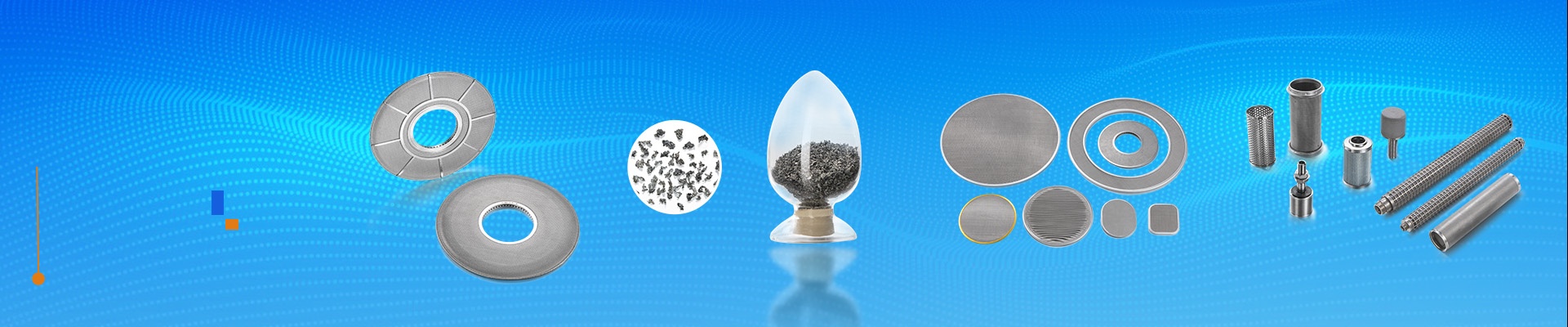
Futai Machinery Co., Ltd. specializes in providing customers with Components for Synthetic Fiber Spinning Machines and Components for Texturizing Machines, textile Ceramic guides, and auxiliary equipments. The company can produce metal sand, leaf discs,candle filters, spin pack filters, spinnerets, metering pumps, spin pack body, filtration systems, PU discs, suction guns, spindles, Bamag texturizing machine accessories, ceramic guides, cleaning equipments, etc.
Post time: Jun-12-2026