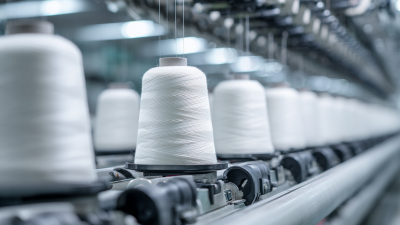
Polyester Melt Spinning has really taken off as a game-changer in the world of textile manufacturing. Basically, it’s a process that lets manufacturers produce high-quality polyester fibers simply by melting polyester chips directly—no need for complicated steps. I read in a report by Technavio that the global market for polyester fibers is expected to grow at about 5% annually between 2021 and 2025. That’s a pretty clear sign that more and more people are adopting advanced methods like Polyester Melt Spinning to stay competitive.
For manufacturers, this approach has a lot to offer. It’s more efficient, which means lower production costs and less wasted material—win-win, right? Experts from places like Grand View Research also point out that this process uses less energy, which is great news for sustainability efforts. But here’s the thing—companies need to keep a close eye on quality. If melt temperatures aren’t just right or if the processing speeds are off, it can lead to defects that affect how durable the final product will be.
As people become increasingly interested in eco-friendly and affordable textiles, Polyester Melt Spinning is set to become really important in shaping how things will be made in the future. Companies like Indorama Ventures are already investing in new tech to boost their manufacturing game. All of this suggests that Polyester Melt Spinning is going to be a key player in the textile industry moving forward—but of course, it also comes with challenges that need ongoing attention and tweaks to get it just right.
Polyester melt spinning is a method used to create polyester fibers. The process begins with melting polyester pellets at high temperatures. Once the polyester reaches a viscous state, it is extruded through spinnerets, forming continuous filaments. These filaments are then cooled and solidified, ready for further processing. The versatility of polyester allows manufacturers to create fabrics suitable for various applications, from clothing to industrial textiles.
This technique offers several advantages for manufacturers. The efficiency of melt spinning allows for high production rates, minimizing costs. Polyester fibers produced through this method have excellent strength and durability. They also exhibit good moisture-wicking properties, making them ideal for activewear. However, some may find it challenging to control the final fiber characteristics, leading to variability in quality. Manufacturers need to consistently monitor the melting and spinning processes to maintain uniformity. Addressing these challenges can enhance product reliability and consumer satisfaction.
Polyester melt spinning is a vital process in the textile industry. It allows manufacturers to produce high-quality polyester fibers efficiently. This technique involves melting polyester granules and extruding them through spinnerets. The molten material cools and solidifies into fibers. These fibers exhibit excellent strength and durability, making them ideal for various applications.
One key advantage of polyester melt spinning is its cost-effectiveness. Manufacturers can generate large quantities of fibers at a lower cost, which reduces overall production expenses. Additionally, the process allows for better control over fiber properties. Adjusting the temperature and extrusion rates results in fibers with different characteristics. This flexibility is crucial for meeting specific market demands and improving product quality.
Another benefit is sustainability. Polyester melt spinning supports recycling efforts. Manufacturers can use recycled polyester materials, reducing waste and environmental impact. However, the reliance on fossil fuels for production remains a concern. Continuous improvements and research are necessary to enhance the sustainability of this process. This highlights the importance of balancing efficiency with ecological responsibility.
Polyester melt spinning is a widely used technique in the textile industry. It offers several advantages over traditional fiber production methods. Manufacturers often favor it due to its efficiency and lower energy consumption. The melt spinning process converts polyester pellets into continuous filaments, minimizing waste. This method also allows for rapid production cycles, which are crucial for meeting market demands.
In contrast, methods like wet spinning and dry spinning require additional solvent processes. These methods can be more time-consuming and less environmentally friendly. Wet spinning uses chemicals that can create waste, making it less ideal in today’s sustainability-focused market. Dry spinning, while faster than wet spinning, often requires higher temperatures and more energy, increasing operational costs.
However, polyester melt spinning is not without its challenges. For example, controlling the cooling rates during fiber formation can be tricky. If not managed properly, it can lead to weak spots in the fibers. This vulnerability requires continuous monitoring and optimization throughout production. Manufacturers must remain vigilant and innovative in their processes to ensure quality and efficiency in their polyester-based textiles.
The polyester industry has shown remarkable growth over the years. In 2021, global polyester production reached approximately 67 million metric tons. This indicates a steady demand for polyester fibers, driven by its versatile applications. Clothing, home textiles, and industrial products heavily rely on polyester. These applications contribute to the increasing consumption and popularity of this synthetic fiber.
Market trends reveal that Asia-Pacific is the leading region for polyester production. Countries like China dominate the market, accounting for a significant portion of global output. Sustainability is a growing concern in the industry. Manufacturers are seeking eco-friendly production methods, yet challenges remain. Many still rely on traditional processes, which can be resource-intensive. Efforts are underway to balance growth with environmental responsibility.
Despite these efforts, some manufacturers struggle with understanding the implications of sustainability. The shift towards recycled polyester shows promise but requires investment and innovation. The complexity of the supply chain can hinder these changes. As the market evolves, manufacturers must adapt and find ways to meet both consumer demand and environmental standards. This evolution reflects the dynamic nature of the polyester industry.
Polyester melt spinning is a prominent technology in textile manufacturing. However, its environmental impact often requires careful consideration. The process generates significant waste materials and consumes vast energy resources. This raises concerns about sustainability in the long term.
Manufacturers must address the by-products of polyester melt spinning. The chemical processes involved can release harmful emissions. Without proper filtration and treatment, these substances may harm air quality and contribute to climate change. Responsible use of technology is essential. Implementing better practices can help mitigate these effects.
Despite its advantages, polyester melt spinning still poses challenges. Recycling polyester waste remains a complex issue. Efforts to improve the lifecycle of these materials are ongoing but insufficient in many cases. Stakeholders must collaborate more effectively to create viable solutions. This focus will shape the future of polyester production in an eco-friendlier direction.
| Dimension | Description |
|---|---|
| Process | Polyester melt spinning involves melting polyester chips and extruding them through spinnerets to form continuous filaments. |
| Temperature | The process typically occurs at temperatures around 270-290°C. |
| Energy Efficiency | Melt spinning processes are generally energy efficient compared to other fiber manufacturing methods. |
| Production Rate | The process can produce high volumes, often exceeding 200 kg of filament per hour. |
| Environmental Impact | Modern polyester melt spinning technologies have reduced emissions and waste through improved recycling methods. |
| Cost-Effectiveness | The technology allows for lower production costs per unit, benefiting manufacturers financially. |
| Versatility | Polyester filaments can be tailored for various applications, providing flexibility in product offerings. |
Polyester fibers have emerged as a versatile solution for multiple industries. Their resistance to moisture and durability make them ideal for clothing and textiles. In the automotive sector, polyester is used for upholstery and seat covers. Its strength enhances safety and comfort on the road. Moreover, its lightweight nature helps improve fuel efficiency in vehicles.
In the construction industry, polyester fibers are integrated into concrete to increase tensile strength. This helps structures withstand harsh weather and heavy loads. These fibers can also be found in insulation materials, providing thermal efficiency. The innovative applications don't stop there; in the healthcare field, polyester is utilized in surgical sutures and medical garments. These products require materials that can resist bacteria and provide comfort over long periods.
Despite these advantages, there are challenges. The production process can lead to environmental concerns. Many manufacturers are exploring sustainable alternatives. Balancing innovation with eco-friendliness remains a priority. As industries continue to embrace polyester, it will be important to address these issues effectively.
Polyester melt spinning is evolving rapidly, driven by advancements in technology. New techniques are improving efficiency and reducing energy consumption. Innovative machinery now allows for finer filament production, enhancing the fabric's quality. This raises the standard for manufacturers looking for lightweight and high-strength textiles.
Recycling methods are gaining traction. Recycled polyester is becoming a sustainable alternative in the industry. This change addresses environmental concerns while meeting consumer demand for eco-friendly products. Manufacturers can utilize these technologies to create high-performance materials, reducing waste.
Automation plays a crucial role in modernizing polyester melt spinning. Smart systems can monitor processes in real-time, improving control and consistency. However, dependence on technology poses potential issues. Training staff to adapt to these advancements can be challenging. Balancing automation with human expertise remains essential for success in this dynamic field.
The sintered wire mesh candle filter stands out as a premier choice in the quest for enhanced filtration efficiency across various sectors. Its unique construction offers exceptional durability and high dirt-holding capacity, making it particularly suitable for industries such as oil and gas, chemical processing, and pharmaceuticals. According to a recent market analysis report, the sintered wire mesh filter is projected to grow at a CAGR of 6.5% through 2030, driven by the increasing demand for advanced filtration methods that ensure product purity and safety. This trend highlights the critical role of these filters in meeting stringent regulatory standards.
Furthermore, the sintered wire mesh filter's ability to retain particles down to sub-micron sizes positions it as an ideal solution for applications requiring fine filtration, particularly in food and beverage processing and water treatment. The filter efficiently removes impurities and contaminants from both liquids and gases, thereby providing reliable and consistent performance. Research indicates that implementing sintered wire mesh filters can increase operational efficiency by reducing downtime and maintenance costs, further underscoring their value in high-demand environments.
With their resistance to corrosion and high temperatures, sintered wire mesh filters prove to be long-lasting even in harsh operating conditions. The versatility and resilience of these filters make them a formidable asset across a wide range of industrial applications, driving their adoption in global markets focused on sustainability and efficiency improvements.
: Polyester melt spinning is a process that produces high-quality polyester fibers from melted granules.
This process allows manufacturers to produce fibers efficiently, reducing overall production costs significantly.
By adjusting temperature and extrusion rates, manufacturers can achieve different characteristics in the fibers.
The process generates waste and consumes energy, which raises sustainability concerns for manufacturers.
Implementing better filtration and treatment practices can reduce harmful emissions and improve air quality.
Utilizing recycled polyester helps minimize waste and supports sustainability efforts within the industry.
New techniques and machinery are enhancing efficiency and reducing energy consumption in production processes.
Staff training and balancing human expertise with technology can be difficult in this evolving field.
It addresses environmental impacts while ensuring production aligns with consumer demands for eco-friendly products.
Recycling remains complex and challenging, with ongoing efforts needed to improve material lifecycle and usability.
Polyester Melt Spinning is a widely used technique in the production of polyester fibers, which involves melting polyester chips and spinning them into filaments. This method offers several advantages for manufacturers, including high production efficiency, cost-effectiveness, and versatility in creating various types of fibers. Compared to other fiber production methods, such as wet spinning or dry spinning, Polyester Melt Spinning allows for better control over fiber characteristics and a reduced environmental footprint, making it an attractive option in the textile industry.
Industry statistics indicate a strong global demand for polyester, with market trends leaning towards sustainability and innovative applications across various sectors, from fashion to automotive. However, the environmental impact of Polyester Melt Spinning technology cannot be overlooked, prompting continuous advancements to improve sustainability. As manufacturers explore future trends, advancements in Polyester Melt Spinning techniques are expected to further enhance the efficiency and eco-friendliness of fiber production, reinforcing its vital role in modern manufacturing practices.