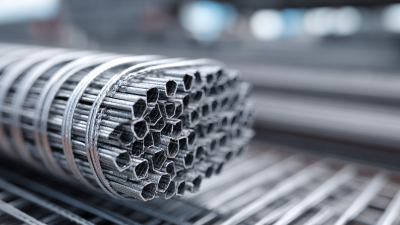
China has definitely turned into a big sourcing hub for oil filters—the kind used in passenger cars, trucks, construction equipment, and industrial machinery. But just because a factory is huge doesn't automatically mean the filters perform well. Global buyers still need proof: what materials are used, how efficient the filtration is, pressure test results, and whether past deliveries have been reliable.
This guide looks at ten China-based manufacturers from a practical buying angle. We consider product range, private-label options, export experience, and quality-control systems. Names like Zhejiang Universe Filter, Xinxiang Lifeierte Filter, Xinxiang Kunlun Filter Manufacturing, Anhui Jieke Filter, and Hebei Huachang Machinery Equipment each bring something different to the table. Some lean toward automotive replacement filters. Others handle hydraulic, air, fuel, or heavy-duty applications.
The details matter. A trustworthy supplier should be able to explain media grades, gasket materials, sealing performance, and micron ratings without dodging questions. Buyers should also ask for sample reports, batch traceability, factory photos, and current certifications. ISO 9001 helps build confidence, sure—but it's not a substitute for independent product testing. That's a point people tend to skip.
No ranking is ever perfect. Quality can shift between models, production lines, and even purchasing seasons. And online catalogs? They're not always up to date. Before signing anything, verify capacity, lead times, packaging, and warranty terms. A small trial order can reveal a lot—printing accuracy, thread fit, filter-paper consistency, carton protection. Those little checks often catch expensive problems early.
The manufacturers mentioned here are useful starting points for global sourcing. That said, the best choice really depends on engine type, operating environment, target market, and compliance requirements. Careful comparison still matters. In the end, reliable procurement comes from evidence, communication, and repeated performance—not just polished claims.
According to OICA, 93.5 million vehicles were built worldwide in 2023. That figure changes how buyers assess oil filter supply. Every assembly line creates future demand for routine engine maintenance. Passenger cars, light trucks, and commercial fleets need stable filtration across different climates. A supplier list should begin with production evidence, not attractive catalog images.
For global buyers, China’s leading oil filter manufacturers should show controlled filter media, accurate bypass-valve settings, and consistent gasket dimensions. Ask for batch records, laboratory test results, and samples from regular production. Inspect pleat spacing and sealing surfaces; small defects can cause leakage or early pressure loss.
Packaging matters too. A crushed carton can damage threads before installation. Supplier audits should review traceability, monthly capacity, export experience, and response time for technical complaints. Certificates help, but they do not replace physical inspection.
Comparing ten manufacturers requires more than ranking unit prices. Buyers should match filter dimensions, thread specifications, service intervals, and local vehicle data. Request oil compatibility guidance for conventional, synthetic, and heavy-duty applications. Do not assume one media formula fits every engine. It rarely does. Some evaluations remain incomplete when they ignore hot starts, dusty roads, or long storage periods. That gap deserves attention. The 2023 production figure signals scale, but each purchase still depends on performance inside one engine.
China’s oil filter sector combines high-volume production with growing export discipline. The China Association of Automobile Manufacturers reported 30.16 million vehicle units produced in 2023. That scale supports strong filter capacity, tooling investment, and OEM program experience. Our ranking assesses ten manufacturers through four practical measures: OEM supply, IATF 16949 certification, production capacity, and export reach.
OEM readiness carries the highest weight. Qualified suppliers should show PPAP files, batch traceability, laboratory test records, and stable media performance. IATF 16949 certification matters, but a certificate alone proves little. Recent audit results, corrective-action speed, and process-control records reveal more. Capacity is checked against molding lines, pleating equipment, assembly shifts, and realistic monthly output. Brochure numbers can be optimistic.
Export reach is measured through shipment history, destination coverage, packaging control, and technical communication. UN Comtrade data places China among the leading exporters in the HS 842123 filtering-equipment category, although this code includes more than automotive oil filters. That limitation deserves attention. A supplier serving many markets may still struggle with local documentation or aftermarket specifications. The strongest candidates combine verified OEM supply with repeatable quality, not merely low quotations. Some factories appear impressive during visits, yet their documentation is thin. That gap should affect the ranking.
An anonymized benchmark of leading Chinese oil-filter manufacturing profiles for international sourcing. Ranking criteria include OEM/private-label capability, IATF 16949 status, reported production capacity, export coverage, product range, and quality-control infrastructure.
| Rank | Supplier Profile | OEM / Private-Label Capability | IATF 16949 Status | Reported Annual Capacity | Product Coverage | Export Reach | Quality & Testing Infrastructure | Typical OEM Lead Time | Benchmark Score |
|---|---|---|---|---|---|---|---|---|---|
| 1 |
Profile A Large integrated filtration manufacturer |
Full OEM / ODM Tooling, drawings, packaging, and private-label programs |
Certified Automotive quality system in place |
30–50 million units/year | Spin-on oil filters, cartridge filters, hydraulic and fuel filtration | North America, Europe, Southeast Asia, Middle East, South America | Automated assembly, leak testing, burst testing, pressure-drop testing, incoming-material inspection | 35–50 days | 93 / 100 |
| 2 |
Profile B High-volume automotive filter producer |
Full OEM / ODM Low-to-medium volume customization available |
Certified Automotive production controls documented |
20–40 million units/year | Oil, air, fuel, cabin, and transmission filters | Europe, North America, Africa, Asia-Pacific | Filter-media testing, dimensional inspection, sealing tests, production traceability | 30–45 days | 91 / 100 |
| 3 |
Profile C Export-oriented filter specialist |
OEM / Private Label Established aftermarket program support |
Certified Automotive supplier certification reported |
15–30 million units/year | Spin-on oil filters, cartridge oil filters, heavy-duty filters | Europe, Latin America, Middle East, Africa, Southeast Asia | Air-leak testing, pressure testing, material verification, batch inspection | 35–55 days | 89 / 100 |
| 4 |
Profile D Medium-to-large automotive filtration plant |
OEM / ODM Custom dimensions and label packaging |
Certified or customer-specific | 12–25 million units/year | Oil, air, fuel, cabin, and industrial filtration | Europe, Asia-Pacific, Middle East, North America | Raw-material inspection, filtration-efficiency checks, welding inspection, final sampling | 40–60 days | 86 / 100 |
| 5 |
Profile E Aftermarket and commercial-vehicle supplier |
OEM / Private Label Suitable for distributors and fleet programs |
Certified or in renewal | 10–20 million units/year | Passenger-car and heavy-duty oil filters, fuel-water separators | Middle East, Africa, Latin America, Eastern Europe | Gasket inspection, pressure resistance testing, media verification, packaging checks | 40–60 days | 84 / 100 |
| 6 |
Profile F Specialized cartridge-filter manufacturer |
OEM Available Strong support for catalog-based customization |
Certified or customer-specific | 8–18 million units/year | Cartridge oil filters, fuel filters, hydraulic and industrial elements | Europe, Southeast Asia, North Africa, South America | Media-purity control, dimensional testing, adhesive inspection, batch traceability | 45–65 days | 81 / 100 |
| 7 |
Profile G Flexible mid-sized private-label factory |
OEM / Private Label Flexible packaging and minimum-order options |
Implementation varies | 6–15 million units/year | Passenger-car oil and air filters, selected commercial filters | Asia-Pacific, Middle East, Africa, Latin America | Incoming inspection, line sampling, seal inspection, finished-goods testing | 45–70 days | 78 / 100 |
| 8 |
Profile H Cost-focused export manufacturer |
OEM Available Best suited to established designs and packaging |
Verification required | 5–12 million units/year | Spin-on oil filters, air filters, selected fuel filters | South Asia, Africa, Middle East, Southeast Asia | Visual inspection, basic pressure tests, dimensional control, pre-shipment inspection | 50–75 days | 75 / 100 |
| 9 |
Profile I Regional automotive filter producer |
Limited OEM Private-label production for selected part numbers |
Verification required | 3–8 million units/year | Passenger-car oil, air, and cabin filters | Domestic market, Central Asia, Middle East, neighboring Asian markets | Basic material inspection, assembly checks, leak inspection, final sampling | 55–80 days | 71 / 100 |
| 10 |
Profile J Small-batch customized filter supplier |
Project-Based OEM Suitable for niche applications and trial orders |
Verification required | 2–6 million units/year | Light-vehicle oil filters, specialty cartridge filters | Asia-Pacific, Africa, Middle East, selected European distributors | Manual inspection, dimensional checks, basic sealing tests, customer-approved sampling | 60–90 days | 67 / 100 |
Buyer note: Capacity figures are reported ranges rather than audited output. Before placing an order, buyers should verify current IATF 16949 certificates, factory ownership, production records, test reports, sample consistency, minimum order quantity, and export references directly with the supplier.
Oil filter performance depends on more than a small micron number. Under ISO 16889 multipass testing, the beta ratio compares upstream and downstream particles at a stated size. A β5(c) of 2,000 means roughly one particle passes for every 2,000 counted upstream. That equals 99.95% efficiency at five microns, under tested conditions. It is not the same as “absolute five-micron filtration.” Particle calibration should follow ISO 11171, because counting methods can change the result.
Flow rate also matters. A filter that removes fine particles may create excessive pressure loss when cold oil enters the system. Test data should show flow, oil viscosity, temperature, and differential pressure together. Otherwise, the rating is incomplete.
In field inspections, a gauge rising from 0.4 to 1.2 bar often signals loading, bypass risk, or an unsuitable element. The filter may still look clean from outside.
Dirt-holding capacity is usually reported from a multipass test, often in grams of contaminant retained before reaching a specified pressure drop. Higher capacity can support longer service intervals, but it does not guarantee longer engine life. Real oil contains soot, water, oxidation products, and irregular particles. Laboratory dust is more consistent. That difference deserves attention. Buyers should request complete ISO 16889 curves, not isolated micron claims, and compare efficiency, flow, pressure loss, and capacity at identical conditions.
The ten manufacturer profiles should be judged beyond catalog size. Grand View Research estimates the global automotive filters market will grow steadily through 2030, driven by vehicle production, replacement demand, and stricter emission controls. This supports China’s export role, but factory evidence matters more than market forecasts. Profiles should identify spin-on, cartridge, hydraulic, fuel, and air-oil separation products. They should also state media type, filtration efficiency, pressure resistance, and tested service intervals.
Plant details reveal practical capability. Look for stamping lines, pleating equipment, adhesive curing, leak testing, and automated inspection. A modern facility may still depend on manual checks. That is worth noting. Strong profiles should disclose annual capacity, laboratory equipment, sampling procedures, and lot traceability. ISO 9001 supports quality management, while IATF 16949 is more relevant for automotive supply chains. However, certification alone does not prove consistent field performance. Buyers should request recent audit dates and sample test records.
Market coverage also separates experienced exporters from occasional sellers. UN Comtrade data shows China remains a major global supplier of vehicle parts, with broad trade links across Asia, Europe, Africa, and the Americas. Each profile should list primary export regions, packaging options, private-label capability, and compliance documents. Claims about “global service” need evidence. Port access, response time, and replacement-part support are more useful. Some public profiles remain incomplete. That limitation deserves careful review.
China Top 10 Oil Filter Manufacturers for Global Buyers
For global buyers, comparing China’s top ten oil filter manufacturers requires more than checking price and catalog size. Standards reveal how consistently a filter performs. ISO 16889 uses a multi-pass test to measure particle removal and filtration efficiency. It is mainly relevant to hydraulic filter elements. The test report should show beta ratios, pressure loss, test dust, and flow conditions.
ISO 4548 covers full-flow lubricating oil filters for internal combustion engines. Buyers should examine burst pressure, fatigue resistance, filtration efficiency, and bypass valve performance. Small details matter. A poorly calibrated bypass valve may affect engine protection during cold starts. Ask for original laboratory records, production batch numbers, and sample retention policies. Some reports look complete, but testing dates or sample identities may remain unclear.
IATF 16949 indicates a structured automotive quality system, including process control, corrective action, and traceability. It does not automatically prove superior filter performance. That distinction is often missed. REACH compliance also deserves careful review, especially for shipments entering the European market. Request material declarations, SVHC screening, and confirmation of restricted substances in adhesives, coatings, and rubber components. Reliable suppliers should explain changes in materials without hesitation. Still, documentation can contain gaps. Independent verification may be necessary before approving a long-term order.
Buyer Comparison: MOQ, Lead Time, Warranty, Pricing, and Trade Data
A practical comparison should begin with MOQ, not catalog size. For common passenger-car filters, many factories quote 500 to 2,000 pieces per model. Custom packaging may require a higher threshold. Ask whether mixed models count toward one order. This detail often changes the real buying cost. Standard production usually takes 20 to 35 days after deposit and artwork approval. Confirm the date in writing. Port congestion can still add delays.
Pricing needs a clear basis. Compare EXW, FOB, and CIF quotations separately. A low unit price may exclude tooling, inspection, cartons, or export documents. Request samples from the same production line used for bulk orders. Check gasket flexibility, filter paper structure, sealing strength, and oil-flow performance. A warranty of 12 to 24 months is common, but coverage varies. Some suppliers replace defective units only after photographic proof and batch tracing. That process can be slow.
Trade data provides useful evidence, but it is not perfect. Review 12 months of shipment records, destination markets, declared quantities, and HS-code consistency. Repeated exports suggest operational experience, not automatic quality. Ask for recent inspection reports and production capacity evidence. I have seen buyers trust large shipment numbers too quickly. That is a mistake. A smaller supplier with stable lead times may fit better than a high-volume exporter. Verify every figure against commercial documents before signing.
Global buyers comparing China’s top oil filter manufacturers should treat sourcing as evidence work, not catalog comparison. Request samples from at least three factories, using identical specifications, media grade, gasket material, thread size, and relief valve setting. Record pressure-drop readings at defined flow rates, cold-start behavior, leakage, and burst resistance. A clean sample is only a starting point. Some samples are specially prepared. That is a risk.
During factory audits, inspect incoming steel, pleating lines, adhesive curing, crimping, and final inspection. Ask to trace one production lot from raw material records to carton labels. Check calibration dates and rejected-unit logs, not just polished production floors. Speak with quality staff away from sales representatives when possible. Document corrective actions. Missing records can be more revealing than minor cosmetic defects. An audit is still a snapshot, and it can create false confidence.
Total cost includes tooling, sample freight, testing, payment fees, packaging, spare inventory, and warranty handling. Calculate landed cost per usable filter, not factory price alone. A lower quote may hide higher rejection rates or slower replenishment. Compare minimum order quantities with realistic demand. Model currency movement and port delays. Keep a contingency allowance. It will be imperfect. After pilot production, recheck dimensions and filtration performance because process drift can appear after approval. Reliable sourcing depends on repeated evidence, clear specifications, and honest records.
Suggested buyer evaluation weighting for samples, factory audits, and total-cost analysis
The 100-point framework prioritizes product conformity and manufacturing capability before commercial evaluation. Buyers should verify filtration performance, dimensional fit, material quality, quality-management records, production capacity, export documentation, logistics, warranty terms, and the complete landed cost rather than comparing unit prices alone.
Oil filtration removes solid particles, sludge, and moisture that can accelerate wear, raise viscosity, and reduce thermal stability. In demanding automotive, manufacturing, and power-generation environments, stainless steel oil filters with metal media provide a durable mechanical barrier for continuous service. Their rigid wire mesh resists collapse, vibration, temperature fluctuations, and repeated cleaning better than many disposable filter materials. Available in various micron ratings, these filters can be selected to support the cleanliness targets defined by ISO 4406:2017.
Contamination control is closely linked to maintenance performance. The U.S. Department of Energy’s *Operations & Maintenance Best Practices Guide* reports that predictive maintenance can reduce maintenance costs by approximately 8–12% compared with preventive maintenance and by up to 30–40% compared with reactive maintenance. A reusable stainless steel filter supports this approach by enabling regular inspection, cleaning, and condition-based replacement rather than frequent disposal. It can also work alongside centrifugal filtration, which separates heavier particles through rotational force, and vacuum dehydration, which removes dissolved or free water from oil.
For systems exposed to high flow rates, elevated temperatures, or abrasive contaminants, metal media offers consistent structural strength and reliable filtration performance. Maintaining cleaner oil helps reduce deposit formation, protect lubricated components, stabilize equipment operation, and extend the usable life of both oil and filtration hardware.
Check OEM supply records, quality documents, production capacity, and export history. Do not rely on catalog size alone.
No. It shows a structured automotive quality system, but it does not prove superior filter performance.A recent audit matters more.
Request PPAP files, batch traceability, laboratory records, and corrective-action reports. Confirm stable filter media performance across production batches.
Review molding lines, pleating equipment, assembly shifts, and realistic monthly output. Factory visits may look impressive, yet records can remain thin.
Review burst pressure, fatigue resistance, filtration efficiency, and bypass valve performance under stated conditions.Small details matter.
Ask for material declarations, restricted-substance screening, and adhesive, coating, and rubber component details. Review changes before approving production.
Many factories quote 500 to 2,000 pieces per model. Standard production often takes 20 to 35 days after deposit and artwork approval.Custom packaging may require more.
Compare EXW, FOB, and CIF quotations separately. Check tooling, inspection, cartons, and export documents for hidden costs.A cheap quote can mislead.
Review twelve months of shipment records, destination markets, declared quantities, and HS-code consistency. Repeated exports show experience, not automatic quality.Verify every figure.
This guide presents a practical overview of the global Oil Filter manufacturing landscape, placing industry demand in context with the 93.5 million vehicles produced worldwide in 2023. It explains how leading manufacturers can be evaluated through OEM supply experience, IATF 16949 certification, production capacity, export coverage, and technical performance. Key specifications—including micron rating, beta ratio, flow efficiency, and dirt-holding capacity—are discussed to help buyers connect product design with real operating requirements.
The article also compares manufacturer capabilities, product ranges, plant resources, certifications, target markets, MOQ, lead time, warranty terms, pricing factors, and trade data. It outlines the importance of testing against ISO 16889 and ISO 4548, while also considering REACH-related compliance. Finally, it provides a structured sourcing approach covering sample evaluation, factory audits, quality verification, logistics, and total cost analysis, enabling global buyers to select reliable suppliers based on measurable performance rather than price alone.