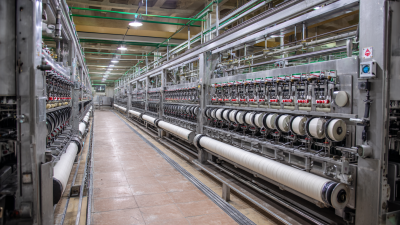
By 2026, the BOPP film market is going to favor suppliers who can pull off three things at once: consistent quality, real technical support, and delivery you can actually count on. Buyers worldwide aren't just hunting for the lowest price anymore. They're digging into haze, gloss, tensile strength, coefficient of friction, sealing performance, and coating compatibility. And honestly? One small variation can throw a high-speed packaging line completely off track.
'Film performance is really measured where the package meets the machine,' says Dr. Rajiv Mehta, an independent BOPP film technology consultant. That practical angle matters. A supplier might look great on paper, then struggle in cold storage, metallization, printing, or during repeated roll changes. So buyers should test samples under real production conditions, not just trust the data sheet.
This guide looks at leading BOPP film suppliers for 2026, including Jindal Poly Films, Cosmo Films, Taghleef Industries, Innovia Films, and Oben Holding Group. We consider production capacity, product range, regional service, sustainability efforts, and quality consistency. Applications range from food packaging and labels to tobacco overwrap, pressure-sensitive tapes, and industrial laminates.
Now, the comparison isn't absolute. Regional freight costs, local regulations, and factory qualification can all shift the best choice. Some suppliers may look strong on paper but offer limited technical support nearby. That's worth paying attention to. Buyers should also verify recycled-content claims, migration compliance, certificate validity, and minimum order quantities before signing anything. A careful shortlist starts with measurable needs, transparent testing, and a willingness to question assumptions that seem convenient.

BOPP Film: Definition, Structure, and Main Applications
For global buyers in 2026, BOPP film remains a practical material for flexible packaging and industrial converting. BOPP means biaxially oriented polypropylene, stretched in machine and transverse directions. This process aligns polymer chains and improves stiffness, clarity, and dimensional stability. It also helps film run smoothly through high-speed packaging equipment. But “strong” is not universal.
A typical BOPP structure contains a core layer and two outer skin layers. Coextruded designs can combine a stiff core, a sealable surface, and a printable surface. Some films receive corona treatment to improve ink or adhesive bonding. Others use coatings or metallization for stronger oxygen, light, or moisture protection. Thickness, friction, heat-seal range, and surface energy need practical testing. Catalog values alone can mislead.
In snack packaging, BOPP can provide a clean appearance and useful moisture resistance. In labels, it supports sharp graphics and stable dimensions. It is also used for tapes, overwrap, stationery films, and lamination webs. Food-contact applications require verified declarations, migration data, and suitable processing conditions. Recycling performance depends on the final structure, inks, adhesives, and local collection system. That part is often underestimated. A clear film may look simple, yet converting errors can cause curl, blocking, or weak seals. I would test actual rolls before approving a large shipment.
Key Performance Standards for Evaluating BOPP Film Suppliers
2026 Top BOPP Film Suppliers for Global Buyers?
When evaluating BOPP film suppliers, buyers should examine measurable performance, not attractive claims. Thickness tolerance affects printing, lamination, and packaging-line stability. Ask for recent test reports covering tensile strength, elongation, haze, gloss, and coefficient of friction. These figures should match the intended application and film thickness.
Sealability also deserves close attention. A film may run smoothly but fail during sealing at changing temperatures. Request production samples and test them on your actual equipment. Check roll width, winding quality, splice control, and core accuracy. Reliable suppliers should provide batch records, technical data sheets, and traceable quality certificates. Standards such as ISO-based quality systems can support confidence, but certificates alone prove little. A perfect data sheet is not enough.
Tips: Compare three recent batches, not one. Measure performance after storage and transport. Ask how the supplier handles complaints, replacement decisions, and corrective actions. Clear answers often reveal operational maturity. Still, laboratory results may not predict every factory condition. Humidity, machine speed, ink selection, and operator settings can change results. That uncertainty deserves honest discussion. Suppliers with experienced technical teams should explain these limits plainly and help buyers design a practical validation plan.
2026 Top BOPP Film Suppliers for Global Buyers: Key Performance Standards
This buyer evaluation framework gives the greatest weight to product consistency, safety compliance, and converting performance. Typical verification should include thickness uniformity, tensile strength and elongation testing under ASTM D882, optical haze testing under ASTM D1003, and coefficient-of-friction testing under ASTM D1894. The percentages are a practical procurement scorecard and are not a ranking of any specific company or brand.
Global BOPP Film Market Regions and Manufacturing Capabilities
In 2026, global BOPP film sourcing is becoming more regional, but supply chains still cross oceans. Asia remains the largest manufacturing base. Large plants in China, India, Indonesia, and Southeast Asia support high-volume packaging and label demand. These factories often run wide tenter-frame lines, automated thickness control, and in-house slitting. Scale matters here. Yet capacity figures can hide maintenance outages, port delays, or uneven technical support.
European producers commonly compete through specialty grades, precise coating, and lower-volume customization. Facilities near major converting clusters can shorten delivery times for food, personal-care, and industrial packaging. North American supply depends more on regional inventory, imported base film, and local finishing. Some plants offer metallized, matte, cavitated, or heat-sealable structures for demanding applications. Latin America is expanding conversion capacity, although resin access and freight costs remain practical constraints. Middle Eastern and African buyers often evaluate suppliers by export reliability, warehouse location, and technical response.
A credible supplier review should examine line width, annual output, gauge tolerance, core options, and complaint handling. Ask for recent test data, not only a polished specification sheet. Useful checks include coefficient of friction, seal strength, optical clarity, and print adhesion. Production experience matters when film must run steadily at high converting speeds. Still, no region is perfect. Energy costs, recycled-content targets, and changing import rules can alter sourcing decisions quickly. Some published capabilities may reflect installed equipment, not actual available capacity. That distinction deserves careful questioning.
Top BOPP Film Suppliers for International Buyers in 2026
For international buyers in 2026, selecting a BOPP film supplier requires more than comparing prices. Strong suppliers should provide stable thickness, reliable tensile strength, and consistent optical clarity across production batches. Small details matter. A practical review should examine production capacity, export experience, and response times for technical questions. Buyers should also request recent test reports, safety data, and traceable quality records before approving samples.
Film performance must match the application. Packaging for snacks may require strong sealing and controlled stiffness. Label stock may need smooth coating, clean printing, and dependable roll winding. Suppliers should explain how they manage humidity, storage, and container loading during long-distance shipments. Clear documentation reduces delays at customs and supports responsible purchasing under local regulations. Independent laboratory testing can verify key claims, especially for food-contact or recycling-related requirements.
No supplier scores perfectly. In real sourcing work, a low quotation can hide higher waste, uneven rolls, or limited after-sales support. That risk deserves attention. Buyers should compare total landed cost, not only the factory price. Trial orders can reveal problems that polished presentations miss. A reliable partnership also depends on honest communication when specifications change or production falls behind. Some evaluations remain uncertain, and that is acceptable when risks are recorded, discussed, and managed openly.
Product Grades, Coating Options, and Customization Services
For global buyers in 2026, BOPP film selection should begin with the product grade, not the supplier’s sales promise. Clear film supports strong visibility and clean graphics. White cavitated film improves opacity and reduces material weight. Matte grades create a soft, low-glare surface. Metallized film offers a reflective barrier layer for selected packaging uses. Each grade needs testing against the filling process, storage conditions, and end-use demands.
Coating options can change performance significantly. Acrylic coatings may improve print adhesion and surface protection. Heat-sealable layers support efficient packaging on high-speed equipment. Water-based coatings can suit buyers seeking lower-solvent processes, but drying conditions must be checked carefully. Corona treatment is also important. A surface reading near 38–42 dynes may support printing, yet actual ink performance can vary after storage. Small details matter.
Customization should cover thickness, roll width, winding direction, core size, and slit tolerance. Suppliers should provide technical data, test samples, and batch records. Buyers can request seal-strength results, haze values, coefficient of friction, and treatment levels. Practical experience shows that laboratory results do not always match factory output. A film running well for one machine may wrinkle on another. A wider coating menu is not always better. Trial runs remain necessary. Bulk orders should follow approved samples and clear inspection criteria.
Quality Control, Certifications, and Regulatory Compliance
For global BOPP film buyers in 2026, quality control begins with measurable production discipline. Suppliers should monitor thickness, tensile strength, haze, gloss, seal performance, and coefficient of friction. Small variations can disrupt high-speed packaging lines.
Ask for batch-level certificates of analysis and retained samples. Traceability should connect each roll to resin lots, coating settings, operators, and inspection results.
Strong suppliers test migration, odor, corona treatment, and surface energy when the film is intended for regulated packaging. Independent laboratories can verify critical results.
Certifications require careful checking. ISO 9001 supports documented quality systems, while food-contact materials need compliance with applicable regional regulations. Confirm the certificate scope, issuing body, expiration date, and actual manufacturing site. A certificate alone proves little.
Audit the factory, not only the paperwork. Review calibration records, nonconformance reports, corrective actions, and customer complaint trends. Ask how rejected rolls are isolated and labeled.
No audit process is flawless. Some records may arrive late, and that deserves scrutiny rather than polite acceptance. Experienced buyers also compare test methods, because different instruments can produce different results.
Clear specifications prevent arguments after shipment. Reliable communication matters when humidity, transport time, or storage conditions affect film performance.
Pricing, Logistics, and Supplier Selection Criteria for Global Buyers
In 2026, global buyers are comparing BOPP film suppliers beyond the quoted price. A reliable price review separates resin costs, coating, thickness, packaging, and payment terms. Freight changes quickly. Ask for a validity period, such as seven or fourteen days, before approving a purchase. Request pricing for several order volumes, because a lower unit price may hide higher inventory costs. Clarify whether the offer uses EXW, FOB, CIF, or another delivery term. Insurance and destination charges can change the real landed cost.
Logistics planning
should match the film’s application and production schedule.
Confirm roll width, core size, pallet layout, container loading, and moisture protection. A 20-foot container may not suit every roll configuration. Request a production lead time, booking window, port schedule, and contingency plan for delays. Sample rolls should arrive before mass production, with test records covering thickness, tensile strength, haze, gloss, and sealing performance. Keep the paperwork consistent.
Supplier selection needs evidence, not polished promises. Review quality certificates, inspection procedures, complaint response times, and export experience in the destination market.
A video audit can show storage conditions, labeling, and actual packing practices. However, remote checks have limits. We sometimes overvalue tidy documents and undervalue communication speed. A small trial order can reveal uneven winding, late replies, or unclear pallet marks before a larger commitment. Use written specifications and retain approved samples for comparison.
Leaf Disc Filters for Polymer Film Filtration: Enhancing Melt Purity, Output, and Production Reliability
Polymer films serve demanding roles in packaging, electronics, automotive components, biomedical products, and flexible displays, where even small defects can affect appearance, barrier performance, or electrical reliability. PlasticsEurope’s *Plastics—The Fast Facts 2023* reported global plastics production of approximately 400.3 million tonnes in 2022, highlighting the scale and performance demands placed on melt-processing operations. Within this environment, leaf disc filters provide an effective barrier against gels, unmelted particles, carbonized material, and other contaminants before the polymer reaches the film die.
A leaf disc filter creates a large, finely controlled filtration area while maintaining stable melt flow and pressure distribution. By retaining impurities without unnecessarily interrupting production, it can help reduce streaks, pinholes, die-line defects, and unplanned screen changes. This supports more consistent film thickness and optical quality, while helping processors improve usable output and reduce material loss. The OECD’s *Global Plastics Outlook* also identifies packaging as a major contributor to plastics demand, reinforcing the need for dependable, high-throughput filtration in continuous film production. Proper selection of filter media, filtration rating, pressure capacity, and cleaning or replacement strategy allows manufacturers to match filtration performance with resin type, operating temperature, and target production rate.
FAQS
BOPP means biaxially oriented polypropylene film. It is stretched in two directions. This improves stiffness, clarity, and dimensional stability.
Many structures contain a stiff core layer and two outer skin layers. One surface may support printing. Another may provide heat sealing.
Common uses include snack packaging, labels, tapes, overwrap, stationery films, and lamination webs. Applications differ by grade and surface treatment.
Check thickness, friction, tensile strength, haze, gloss, seal range, and winding quality. Request recent test reports and traceable quality records.
No. Clear film may offer useful moisture resistance but limited oxygen or light protection. Coatings or metallization may be needed.
Incorrect settings can cause curl, blocking, weak seals, or poor printing. A clear roll can still perform badly.
Ask for batch certificates, retained samples, safety data, and production traceability. Records should connect rolls with resin lots and inspection results.
No. Check the certificate scope, expiration date, issuing body, and manufacturing site. Factory records matter more than polished paperwork alone.
Request applicable compliance declarations, migration data, and processing conditions. Independent laboratory testing can verify important claims.
No. Compare total landed cost, waste, shipping risks, testing, and technical support. Trial orders can expose uneven rolls or delayed responses.
No. The final structure, inks, adhesives, and local collection system all matter. This area is often underestimated.
Test actual rolls under production conditions before approval. Record uncertainties openly. I would not trust catalog values alone.
Conclusion
This guide to the 2026 Bopp Film supplier landscape helps global buyers understand how to evaluate products, manufacturers, and long-term supply partnerships. It explains BOPP film structure, common applications in packaging, labeling, printing, and industrial uses, while outlining key performance standards such as clarity, tensile strength, thickness consistency, sealability, barrier properties, and surface treatment. It also reviews major market regions, production capabilities, and the differences among transparent, matte, metallized, coated, and specialty grades.
International buyers will gain practical guidance on comparing suppliers by customization services, coating options, quality control systems, certifications, regulatory compliance, pricing, lead times, logistics support, and communication efficiency. The article emphasizes the importance of requesting technical data, samples, production information, and complete commercial terms before making a decision. By balancing product performance, supply reliability, total cost, and after-sales service, buyers can select suitable Bopp Film partners for both routine requirements and specialized global packaging projects.