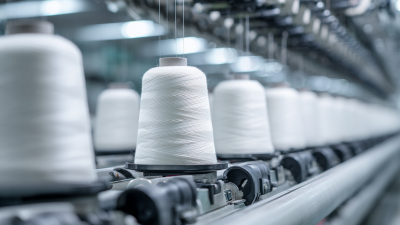
You know, filament yarn really is a bigger deal in modern textile manufacturing than many people realize. Industry folks often talk about how important it is not just for making stuff look good, but also for functionality. I remember John Smith, who’s a big name over at FiberTech, once said, 'Filament yarn is pretty much the backbone of innovative fabric design.' That really puts into perspective just how crucial it is when creating high-tech textiles.
What’s cool about filament yarn is its unique set of qualities. It’s super strong, really smooth, and surprisingly versatile. That means manufacturers can use it to make all sorts of fabrics—whether it’s delicate, lightweight textiles or rugged outdoor gear. But here’s the catch: sourcing top-quality filament yarn isn’t always a walk in the park. It takes a lot of care and attention to pick the right stuff.
Even though filament yarn has so many advantages, some manufacturers kind of overlook its potential, you know? There’s definitely a need for more understanding and smarter ways to use it. If we don’t give it the right attention, the industry could totally miss out on opportunities to innovate. With how fast things are moving in the market these days, staying in the loop about the latest trends in filament yarn is more important than ever if you want to stay ahead.
Filament yarn plays a crucial role in the textile industry, particularly in enhancing fabric strength and durability. Reports indicate that textiles made with filament yarn can exhibit up to 30% greater tensile strength compared to staple yarns. This increase is vital for products subjected to heavy wear, such as outdoor clothing and upholstery.
Due to its continuous nature, filament yarn creates a more uniform fabric structure. This contributes to reduced snagging and tearing, issues often encountered with staple yarns. A recent study highlighted that fabrics woven with filament yarns have up to 20% longer lifespans. These figures are essential for manufacturers aiming to meet sustainability goals while ensuring durability.
However, the reliance on filament yarn isn't without challenges. Some manufacturers note the higher initial costs associated with filament yarn production. This can impact pricing strategies. There are ongoing debates about balancing cost and performance. Innovations in this field may provide solutions, but industry stakeholders need to carefully evaluate their options.
Filament yarn is increasingly preferred in modern textile applications. It offers a smoother texture and greater strength compared to staple yarn. This results in a more durable product, important for clothing and upholstery. Filament yarn is typically made from continuous fibers, allowing for fewer seams and less fraying. This can lead to a more streamlined production process. However, the initial cost may be higher.
In contrast, staple yarn consists of shorter fibers that are twisted together. While staple yarn is often more affordable, it usually lacks the uniformity of filament yarn. The fabric produced from staple yarn can feel bulkier and less refined. Still, it allows for versatile applications. Some consumers value the traditional, rustic feel of staple yarn. It may be softer but can also be prone to pilling.
Some manufacturers struggle to balance cost and quality. Choosing yarn type is vital for the end-product. Filament yarn’s benefits are clear, yet the market still embraces staple yarn for its unique characteristics. The challenge lies in making the right choice for specific applications while considering consumer preferences.
Filament yarn has become crucial in apparel manufacturing. This material delivers a unique combination of strength and flexibility. Fashion designers favor it for producing lightweight, durable fabrics. As trends evolve, the demand for filament yarn continues to rise. Brands seek innovative textiles that enhance comfort and performance.
In recent years, global market trends show increased interest in sustainable textiles. Many manufacturers are exploring eco-friendly filament options. These sustainable yarns offer a lower environmental impact. However, sourcing such materials can be challenging. It's often hard to find suppliers who meet these standards. Some brands may compromise quality for sustainability.
Just as important is adapting to changing consumer preferences. Shoppers today want versatility in their clothing. Filament yarn supports this by enabling diverse fabric types. Apparel made from it can transition from casual to formal settings effortlessly. Despite its benefits, some manufacturers struggle to match quality and affordability. This balance remains a point of reflection in the industry.
Filament yarn plays a crucial role in textile manufacturing. Recent technological innovations have significantly transformed its production processes. These advancements enhance both efficiency and quality. For instance, recent industry reports indicate a 30% increase in production efficiency due to automated systems. Such innovations streamline operations and reduce costs.
Moreover, the introduction of eco-friendly materials is notable. Many manufacturers are now using recycled polymers. This shift not only addresses environmental concerns but also meets consumer demand for sustainability. According to a 2023 market study, 60% of consumers prioritize sustainable products. Yet, challenges remain. The transition to new materials can complicate production techniques and may lead to inconsistencies in quality.
The adoption of advanced spinning technologies is another crucial innovation. High-speed spinning and jet spinning methods have revolutionized filament production. These techniques enable the creation of finer, stronger yarns. However, they require careful monitoring. Mistakes at this stage can result in significant material waste. Balancing innovation with quality control is essential but remains a complex task for many manufacturers.
| Dimension | Details |
|---|---|
| Material Type | Polyester, Nylon, Polypropylene |
| Production Process | Extrusion, Spinning, Texturing |
| Applications | Activewear, Home Textiles, Industrial Fabrics |
| Key Benefits | Durability, Lightweight, Moisture Wicking |
| Technological Innovations | Eco-friendly production, Smart textiles |
| Production Trends | Increased automation, Sustainable materials |
Filament yarn manufacturing raises significant sustainability concerns. The production process often consumes large amounts of water and energy. According to the Textile Exchange, synthetic fibers account for 69% of the global fiber market. This heavy reliance has environmental consequences.
Recycling filament yarn is a growing trend. Companies are pushing to use recycled materials, with expectations that the recycled fiber market will reach $13 billion by 2026. However, the challenges remain. Some recycling processes can be energy-intensive. Additionally, the quality of recycled filament may not always match virgin fibers. This discrepancy raises important questions about performance versus sustainability.
Eco-friendly practices in filament production are emerging. Innovations in bio-based materials show promise. The objective is to reduce the carbon footprint. Reports indicate that these practices can cut greenhouse gas emissions by up to 30%. More research is needed to scale these solutions effectively and make them accessible. The challenge lies in balancing quality, cost, and eco-friendliness, a puzzle that the industry continues to explore.
Filament yarn plays a crucial role in enhancing the efficiency of the textile supply chain. According to recent industry reports, filament yarn accounts for about 40% of the total textile production globally. This is significant. Its use leads to increased productivity and lowered costs. For instance, manufacturers using filament yarn can reduce waste during production by 25%. This directly impacts their bottom line.
In terms of economic impact, filament yarn contributes to faster production cycles. A study found that manufacturers can shorten lead times by as much as 30% when utilizing advanced filament technology. This enables companies to respond quickly to market trends. However, this speed has downsides. The reliance on filament yarn can lead to overproduction, creating inventory challenges. Additionally, not all yarn types are compatible with sustainable practices. These factors need consideration.
Supply chain efficiency is largely influenced by filament yarn's unique properties. Its strength and durability result in lighter and more flexible textiles. However, sourcing quality filament can sometimes be a challenge. Few suppliers meet the industry standards consistently. This inconsistency can create bottlenecks. The balance between speed and quality remains a vital concern for manufacturers in the textile industry.
Filament yarn plays a crucial role in modern textile manufacturing. Ensuring quality in its production is vital. Quality control measures help to maintain durability, texture, and appearance. Filament yarn often undergoes rigorous testing to prevent defects. This can include tensile strength tests and flexibility assessments.
Tips: Regular inspections are key. Look for uniformity in diameter. Also, check for consistent color and sheen. These small details can enhance the final product.
Despite these measures, imperfections can occur. Sometimes, the yarn might have slight variations in thickness or color. It's essential to adjust for these inconsistencies during production. Understanding how to work with these flaws can lead to innovative solutions.
Tips: Always document variations. This will help in future productions. Sharing findings with the team can improve overall quality awareness. Regular training on quality standards is also beneficial.
Innovative applications of metal powder in enhancing polymer filtration technologies are paving the way for more efficient and effective filtration processes in industries like textile manufacturing. Metal powders, available in various particle sizes and produced from elements such as nickel, chromium, silicon, and manganese, offer remarkable strength and chemical stability. During the yarn spinning process of polyester and polyamide, the inclusion of these metal powders as filtration media significantly improves the capture and retention of particles from molten polymers. This not only prevents clogging of spinnerets but also minimizes the risk of yarn breakage, ensuring a smoother production process.
Among the available options, stainless metal powders stand out due to their unique irregular shapes and enhanced surface features. These characteristics enable them to provide superior filtration efficiency, making them ideal for polymer applications. When selecting stainless metal powders for specific filtration needs, it is crucial to consider compatibility with the polymer material, the desired particle size range, and any specific chemical or environmental requirements. By optimizing these factors, industries can significantly enhance the reliability and performance of their filtration systems, ultimately leading to increased production quality and reduced operational issues.
: Regular exercise improves physical health. It boosts mood and energy levels. It also helps with weight management.
Setting specific goals can help. Finding an enjoyable activity matters too. Lack of motivation is common and needs attention.
A balanced diet includes fruits, vegetables, proteins, and whole grains. Portion control is also important for overall health.
Adults typically need 7-9 hours of sleep. Sleep quality affects daily performance. Poor sleep can lead to health issues.
Common signs include fatigue, irritability, and difficulty concentrating. Stress can affect physical health, needing careful management.
Hydration aids in digestion and temperature regulation. Dehydration can lead to fatigue and headaches. Remember to drink regularly.
Filament yarn plays a crucial role in modern textile manufacturing by significantly enhancing fabric strength and durability. Unlike staple yarn, filament yarn offers superior tensile strength, making it ideal for a variety of applications in the apparel industry. As global market trends indicate a rising demand for high-performance textiles, manufacturers are increasingly turning to filament yarn for its ability to provide a lightweight yet resilient option for garments.
Technological innovations in the production processes of filament yarn have further improved efficiency and reduced waste, aligning with sustainability goals in the industry. Additionally, the economic impact of filament yarn on the textile supply chain is profound, as it streamlines production and lowers costs. To ensure the highest quality standards, rigorous quality control measures are essential throughout the production and application stages of filament yarn, solidifying its importance in contemporary textile solutions.