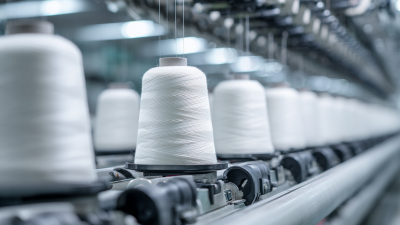
The industrial yarn market is moving pretty fast these days. Thanks to new tech and innovative materials, some exciting trends are popping up. Companies like DuPont and Toray are really taking the lead when it comes to developing high-performance yarns that are stronger and more durable — all to meet the needs of different industries. It’s pretty impressive to see how quickly things are changing.
On another note, sustainability is really shaking things up in the industry. More brands are starting to explore eco-friendly options, which is a big deal given how much consumers are paying attention to environmental issues these days. That said, sourcing sustainable materials isn’t always smooth sailing — there are hurdles to jump over. The industry’s gotta figure out how to navigate these challenges if it wants to stay relevant.
Looking ahead to 2026, there’s a lot to be excited about — from smart fibers to advanced composites, the future of industrial yarn is looking pretty bright, though it’s definitely complicated. Companies have to adapt cautiously and stay on top of trends if they want to keep up. Understanding what’s coming next will benefit everyone — manufacturers and consumers alike. Pretty clear that embracing change and tackling these obstacles head-on are keys to growth.
The landscape of industrial yarn production is rapidly evolving. Emerging technologies are shaping how fibers are created and used. Innovations in materials science are fueling this change. Techniques such as 3D knitting and automated weaving are gaining traction. These methods enhance efficiency and reduce waste. As a result, manufacturers are exploring new fabric applications.
Tips: Incorporate smart technology. Sensors can monitor production processes in real-time. This enables quick adjustments to improve quality. Do not overlook the importance of sustainability. Using recycled fibers is becoming a necessity. It’s essential to think about the environmental impact of yarn production.
Automation is not without challenges. Transitioning to fully automated systems can be complex. Employees may need retraining to adapt to new roles. Production costs can rise during the initial transition phase. It’s important to weigh the pros and cons of technology adoption. Keeping an eye on trends helps in making informed decisions.
As the industrial yarn industry evolves, sustainability emerges as a crucial focus. By 2026, many companies are seeking ways to decrease their environmental impact. Innovative materials sourced from recycled fibers are gaining popularity. These fibers reduce waste while maintaining product quality. However, the transition isn't always smooth. Many manufacturers struggle to find reliable suppliers who meet sustainability standards.
Water use is another area demanding attention. Traditional processes consume significant amounts of water, harming ecosystems. Some manufacturers are exploring closed-loop systems to minimize waste. The challenge lies in balancing efficiency and ecological responsibility. Adopting these new practices often requires substantial investment, making it a complex decision for many businesses.
Consumer demand for ecological consciousness is rising. They want products that align with their values. Yet, not all manufacturers can keep up with this demand. Additionally, ensuring the supply chain is entirely sustainable remains a daunting task. Companies must be transparent about their practices. This openness can foster trust and encourage positive change within the industry.
The industrial yarn landscape is rapidly evolving, driven by innovative fiber blends. These blends combine various materials to enhance strength, durability, and functionality. Each blend offers unique properties, making them indispensable in numerous applications. For example, combining polyester with cotton results in a fiber that is resilient yet soft. This dynamic mix fuels creativity in various industrial sectors.
Sustainability is a key axis in these trends. Recycled fibers are becoming a popular choice for manufacturers. This shift toward eco-friendly materials raises questions about the balance between performance and environmental impact. Can we maintain quality while using sustainable resources? The need for balance remains a topic of discussion among industry leaders.
Future innovations will likely involve biocompatible fibers. These materials could change how we think about industrial yarns. Imagine a future where all synthetic fibers are not only functional but also biodegradable. This vision sparks contemplation about our current practices. Are we ready to embrace genuinely sustainable options? Examining these questions is crucial in shaping the industry's future, focusing on both innovation and responsibility.
Smart yarns are revolutionizing various industries in 2026. These innovative materials integrate advanced technology into textiles. They not only serve practical purposes but also introduce a new level of connectivity. For instance, smart yarns can monitor temperature and moisture levels in work environments. Such features help keep workers comfortable and safe.
In the fashion industry, designers are exploring smart fabrics for wearable technology. These textiles can change color or pattern based on user preferences. This versatility encourages creativity and personalization. However, the challenge lies in balancing functionality and aesthetics. Can these innovations be both practical and stylish?
Construction and healthcare sectors are also tapping into smart yarn applications. Fabrics equipped with sensors detect falls or fatigue in workers. This real-time data collection could enhance safety measures. Yet, reliance on technology raises concerns about data privacy and security. How much information should be shared? Each industry must navigate these challenges while embracing smart yarn innovations.
| Trend | Application | Industry | Key Features | Projected Growth |
|---|---|---|---|---|
| Sustainable Yarns | Eco-friendly textiles | Fashion | Biodegradable, recyclable materials | 15% CAGR |
| Smart Textiles | Wearable technology | Healthcare | Sensors, health monitoring | 20% CAGR |
| High-Performance Fiber | Industrial applications | Automotive | Heat resistant, durable | 12% CAGR |
| Conductive Yarns | Smart clothing | Wearable Electronics | Electrically conductive | 18% CAGR |
| Antimicrobial Yarns | Healthcare textiles | Medical | Inhibits microbial growth | 10% CAGR |
The demand for high-performance industrial yarns is rising. Industries are looking for stronger, lighter, and more durable materials. These yarns are crucial for various applications, from automotive to construction. The performance of these yarns directly impacts product durability and efficiency. Manufacturers are investing in innovative technologies to meet this need.
Tip: Always evaluate your specific requirements before choosing industrial yarns. Consider factors such as tensile strength, flexibility, and resistance to environmental conditions. This assessment can save you time and money in the long run.
Quality control is essential in yarn production. However, not all manufacturers adhere to high standards. This inconsistency can lead to issues in the final product. It’s important to ask questions and understand the production processes behind the yarns you select. Transparency is key when sourcing materials.
Another tip: Stay updated on emerging trends. Networking with industry experts and attending trade shows can provide valuable insights. New materials and technologies are constantly evolving. Being aware of these changes can keep your projects competitive and innovative.
In 2026, the industrial yarn sector faces significant shifts due to regulatory changes. As sustainability becomes crucial, manufacturers must adapt their processes. Stricter environmental regulations impact material sourcing and waste management. Companies are urged to reassess their supply chains. Uncertainty often leads to unintended consequences. Some manufacturers may struggle to meet new standards.
Compliance requires innovation and investment. The demand for eco-friendly materials is growing. Companies need to explore alternative fibers. Issues arise when transitioning from traditional methods to sustainable practices. Not all manufacturers are equipped for this shift. Education on new compliance standards is often lacking.
These regulatory changes might create opportunities for forward-thinking companies. They can leverage sustainability as a competitive advantage. However, challenges remain for traditional manufacturers. Adapting to regulations is not just about compliance. It's about reimagining the entire production process. In this complex landscape, only those willing to evolve will thrive.
Consumer preferences are shaping the industrial yarn market in significant ways. Durability and sustainability are at the forefront of many buyers’ minds. They prefer materials that last longer, reducing waste. Many expect transparency about sourcing and production processes. This demand leads to more eco-friendly options being developed.
Customization is another trend gaining traction. Consumers want specific colors, textures, and performance characteristics. This desire for personalization is pushing manufacturers to innovate. Yet, meeting diverse demands can be complex. Striking a balance between variety and efficiency is challenging. Without proper management, production lines can become overwhelmed.
Innovation isn't just about meeting current preferences. It's also about anticipating future needs. The rise of smart textiles is one area consumers are curious about. However, integrating technology into yarns poses unique challenges. Not all manufacturers are equipped to adapt. Navigating these changes requires flexibility and foresight. Understanding shifting consumer desires will be crucial for those in the industry.
The optimization of polymer film filtration efficiency is crucial for various industries reliant on these advanced materials. Polymer films, known for their protective qualities and versatility, are extensively employed in sectors such as packaging, electronics, automotive, and biomedicine. Their application ranges from acting as barrier layers to electronic device encapsulation, making the integrity of these films paramount to the performance of the final products.
Leaf disc filters play a significant role in enhancing the quality of polymer films. By effectively removing impurities and contaminants from the polymer melt or solution prior to the film formation process, these filters ensure that the produced films are devoid of defects and inconsistencies. This filtration procedure is essential in achieving high-quality polymer films that meet the stringent requirements of various applications. Utilizing advanced leaf disc filter technology not only improves filtration efficiency but also contributes to the sustainability of the production process by minimizing material waste and maximizing yield.
Through the integration of optimized leaf disc filters, manufacturers can significantly enhance the reliability and quality of polymer films, thereby reinforcing their essential role across multiple industries. The continuous improvement in filtration methods is instrumental in meeting evolving demands and standards in the production of polymer films and their diverse applications.
: The articles cover various themes, focused on general knowledge and life tips.
Yes, there are several tips on improving oneself and building good habits.
Some articles touch on money management, but they are not comprehensive.
There are suggestions for mindfulness and self-care practices scattered throughout.
Yes, they include relatable scenarios and practical advice for daily challenges.
They include motivational quotes and stories aimed at encouraging readers.
Most content is universal, but some sections may resonate more with adults.
The articles use simple language, but some concepts may require reflection.
Many insights derive from anecdotes, but they might not fit every reader's situation.
Yes, there are practical suggestions, but not every tip may work for everyone.
The article "2026 Top Industrial Yarn Trends You Need to Know" explores significant trends and innovations shaping the future of Industrial Yarn. It highlights emerging technologies that are influencing production processes, alongside sustainable practices that are expected to enhance the industry's environmental footprint by 2026. The use of innovative fiber blends is also discussed, illustrating how they are crucial in meeting the evolving demands of various applications.
Additionally, the article addresses the growing market demand for high-performance Industrial Yarns and how consumer preferences are impacting design choices. Moreover, the influence of regulatory changes on manufacturing practices is examined, emphasizing the need for compliance in a rapidly changing market. Finally, the relevance of smart yarns and their applications across different industries showcases the transformative potential of Industrial Yarn in the near future.